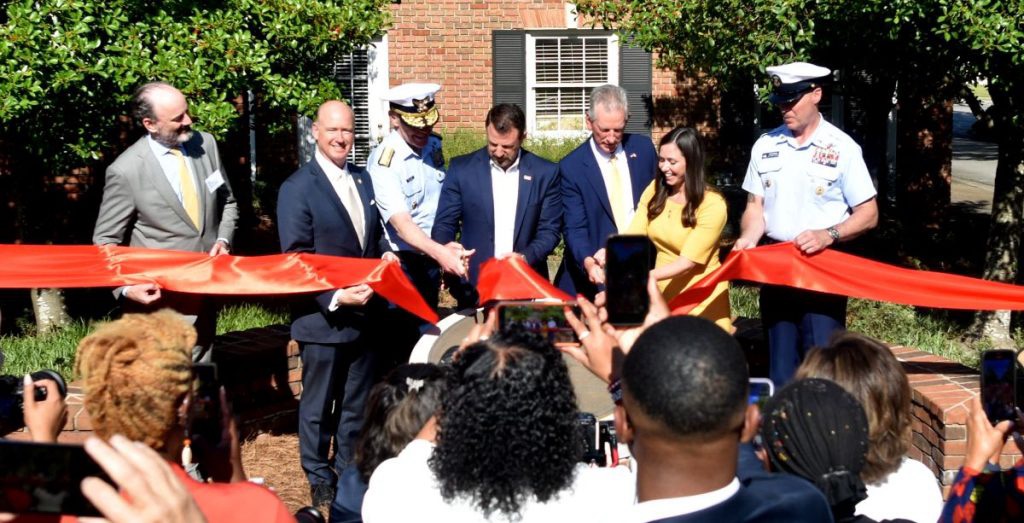
The sale of Birmingham-Southern College is, at last, complete. The long winding down process of The College’s administrative affairs is, however, only getting started.
An institution beleaguered by financial mismanagement for decades has managed to make out a pretty penny in the sale of its final asset – the campus.
The disposition of The Hilltop in this sale to The United States Coast Guard converts the administrative failure of poorly running The College into one of the largest single-asset windfalls in Alabama history.
The question is not whether economic value will be realized from the campus’s sale.
It is: who is realizing this massive value?
The College’s debt totals roughly $50 million. The campus was recently valued at $55 million.
Uncle Sam paid a pretty premium (approximately $70M) for a new military installation in West Birmingham in this $126.5 million transaction…
On paper, BSC’s governance appears straightforward. In reality, it is anything but.
The College’s Board of Trustees is anchored to the United Methodist Church through two conferences that must jointly appoint trustees. Yet that linkage is structurally incomplete. There is no removal mechanism for Trustees once appointed.
Appointment without recall is not oversight—it is a one-way highway to hell.
Compounding this, the two conferences—while not formally merged—operate under a single bishop, effectively functioning as a consolidated administrative body following widespread church disaffiliations.
This context of The College’s governance matters now more than ever because control over the financial proceeds from this sale is not merely a financial issue—it is a governance one.
If trustees attempt to redirect proceeds from this sale (paid into The College’s soon-to-be resuscitated endowment) into the Daniel Coleman-created BSC Foundation—an entity not controlled by the Methodist conferences—the entire framework of denominational stewardship of BSC becomes functionally irrelevant.
There would be, in effect, a transfer of assets from a historically church-affiliated institution into a structure operating outside that ecclesiastical authority.
This is not a technical footnote. It is a fundamental recharacterization of fiduciary duty.
And it raises uncomfortable but necessary questions.
Are displaced faculty and staff—those who most intimately bore the cost of The College’s closure—being made whole through severance packages funded by this sale’s surplus?
If not, why not?
A windfall without restitution is hollow and no cause for celebration.
What of donors who contributed during The College’s deathbed days—funds given with the hope that it might preserve the dying institution?
Can a collapsed institution effectively arbitrage its final asset sale – its campus – into an unrestricted capital pool yielding a $75 million dollar gain?
Officially, the net proceeds of the sale (all $75M of them) will apparently be used to “replenish” The College’s drained endowment.
With an endowment that respectable, BSC should secure a new campus, hire back its staff and faculty, and resume campus operations!
If not that, $75M should pay for the world’s most well-funded and lavish alumni association.
Now that the institution is gone and The Hilltop has finally been sold (really, truly sold to a cash/competent buyer – not the object of desire and receipt of cash-incompetent by other financially fragile Alabamian institutions) – who will be the beneficiary of The College’s remains?